

Custom Optimization Tools for LLMs: What Enterprises Needs
Custom optimization tools for LLMs enhance performance, reduce latency, and improve accuracy for language models across diverse use cases.

Enterprises are no longer experimenting with LLMs; they’re deploying them at scale. But as adoption grows, so do the challenges. Costs spike unexpectedly. Output quality varies across prompts. Latency becomes a bottleneck. Observability gaps make debugging harder.
Still, most teams define “LLM optimization” too narrowly. They focus on model latency or basic prompt tuning and overlook deeper system issues.
In reality, optimization spans the entire GenAI pipeline:
- Retrieval accuracy in RAG systems
- Grounding and context relevance
- Prompt consistency across inputs
- Scoring logic in reranking steps
- Real-time evaluation and feedback integration
Each component introduces failure points if not tracked and tuned. For large organizations with multiple use cases, performance regressions often go unnoticed until users report them.
This blog explains why custom optimization tools for LLM are now essential. These tools go beyond off-the-shelf wrappers or static templates. They allow you to analyze and improve how LLMs retrieve, reason, and respond at scale.
We’ll break down where optimization is needed, which tools matter most, and how they support governance, cost control, and reliability across your GenAI workflows.
If your team is responsible for enterprise-grade LLM infra, optimization isn’t optional; it’s an operational necessity.
What ‘Optimization’ Really Means in the LLM Stack
LLM optimization isn’t just about speeding up responses. It’s about delivering more useful, reliable outputs per token and doing so at a predictable cost.
In enterprise settings, optimization spans multiple dimensions:
- Output fluency and grounding: Are responses coherent and based on verifiable facts?
- Retrieval accuracy in RAG pipelines: Are the right chunks being pulled, or are they semantically off?
- Prompt reliability across use cases: Do prompt templates perform consistently across inputs and users?
- Alignment with the internal LLM knowledge base: Does the model reflect business-specific facts, not just general training data?
Teams often overlook these layers and focus only on latency or token cost. That creates blind spots. For instance, faster responses might come from aggressive truncation or fewer retrieval steps leading to hallucinations or vague outputs.
To detect these tradeoffs, teams need actionable fluency metrics LLM RAG frameworks can track. These include response clarity, semantic overlap with retrieved documents, and accuracy benchmarks based on internal ground truth.
Optimization, then, is about balancing:
- Cost: API usage, vector DB queries, compute
- Performance: Latency, response stability
- Grounding: Alignment with trusted internal data
Without this balance, LLM systems become expensive, inconsistent, and hard to govern. That’s why teams now invest in custom optimization tools for LLM, not just for tuning, but for long-term control and accountability.
Where Bottlenecks Hide in LLM Workflows
Most LLM performance issues aren’t caused by the model; they come from decisions around architecture, retrieval, and evaluation.
Let’s break down where bottlenecks typically emerge:
Build and run governed AI systems
We turn your data into measurable outcomes you can track and act on.
Model Selection
Many teams default to the largest model available, assuming it will produce the best results. But bigger isn’t always better. Smaller models paired with optimized prompts and retrieval can outperform larger models in both speed and cost.
Prompt Templates
Long or overly specific templates inflate token usage without improving quality. Small changes in phrasing can degrade fluency or relevance. Without versioning and testing, prompt drift goes unnoticed.
Prompt Chaining
Multi-step chains add latency and introduce instability. Every step increases the chance of semantic errors. Chains without monitoring become brittle over time.
RAG Tuning
Retrieval systems often pull irrelevant or outdated chunks. When chunking logic is misaligned with the prompt, it leads to semantic drift, responses that sound correct but reference the wrong context. This phenomenon isn’t a model problem; it’s a retriever issue.
Evaluation Loops
Most teams don’t run automated evaluations. As a result, regressions happen silently, especially when external APIs or vector DBs update. Manual reviews don’t scale.
The underlying issue? Lack of observability and fragmentation.
Teams using general-purpose tooling miss key metrics: retrieval precision, prompt latency, or grounding scores. This is where custom optimization tools for LLM make the difference.
These tools offer traceability, scoring, and alerting at each stage. They expose weak links across the LLM workflow, from prompt design to retrieval pipelines to eval logic, so teams can iterate based on real data, not assumptions.
Without them, you're making adjustments in the dark.
Must-Have Custom Optimization Tools for LLM
Off-the-shelf LLM wrappers aren’t enough. Enterprise teams need custom optimization tools for LLM that give visibility, control, and traceability across the entire stack.
Most teams hit scaling limits not because of model quality but due to issues in retrieval, scoring, and evaluation. Custom tooling helps address these blind spots with targeted solutions:
RAG Scoring Dashboards
Track retrieval precision, chunk relevance, and hallucination frequency. Measure how often retrieved context is actually used in the LLM output. Identify noisy or misaligned documents polluting your LLM knowledge base.
Prompt Testing Frameworks
Version and test prompt templates across multiple user inputs, business scenarios, and model versions. Track token usage, fluency degradation, and regression cases. This feature helps maintain consistency as prompt chains grow more complex.
Vector Store Pruning Tools
Embedding databases grow fast, but not all embeddings contribute to output quality. Pruning tools flag outdated or low-signal vectors to improve retrieval precision. This process is critical for optimizing context windows and keeping token costs in check.
LLM Behavior Tracking Agents
Run periodic evaluations on latency, fluency, retrieval drift, and scoring accuracy. Feed these signals into CI pipelines for early detection of output regressions. This approach is beneficial for both custom models and those utilizing rag-as-a-service platforms.
Many commercial tools fail to support core enterprise needs, like IAM integration, audit trails, multi-tenant support, or prompt chain versioning. That’s where building custom optimization tools for LLM becomes not just beneficial, but necessary.
The most advanced orgs version everything: prompts, scoring configs, retriever filters, and even vector DB settings. These tools plug into your modelops framework, giving teams visibility across environments, staging, QA, and production.
Without these systems in place, model performance becomes guesswork. With them, optimization becomes structured, measurable, and repeatable, critical for any org running production-grade LLM infra at scale.
LLM Infra Meets Enterprise-Grade AI Ops
Optimization isn't a one-off task; it’s a continuous lifecycle process. And it can’t be solved by developers alone. Without the right infrastructure, even well-tuned prompts and retrieval logic start to drift over time.
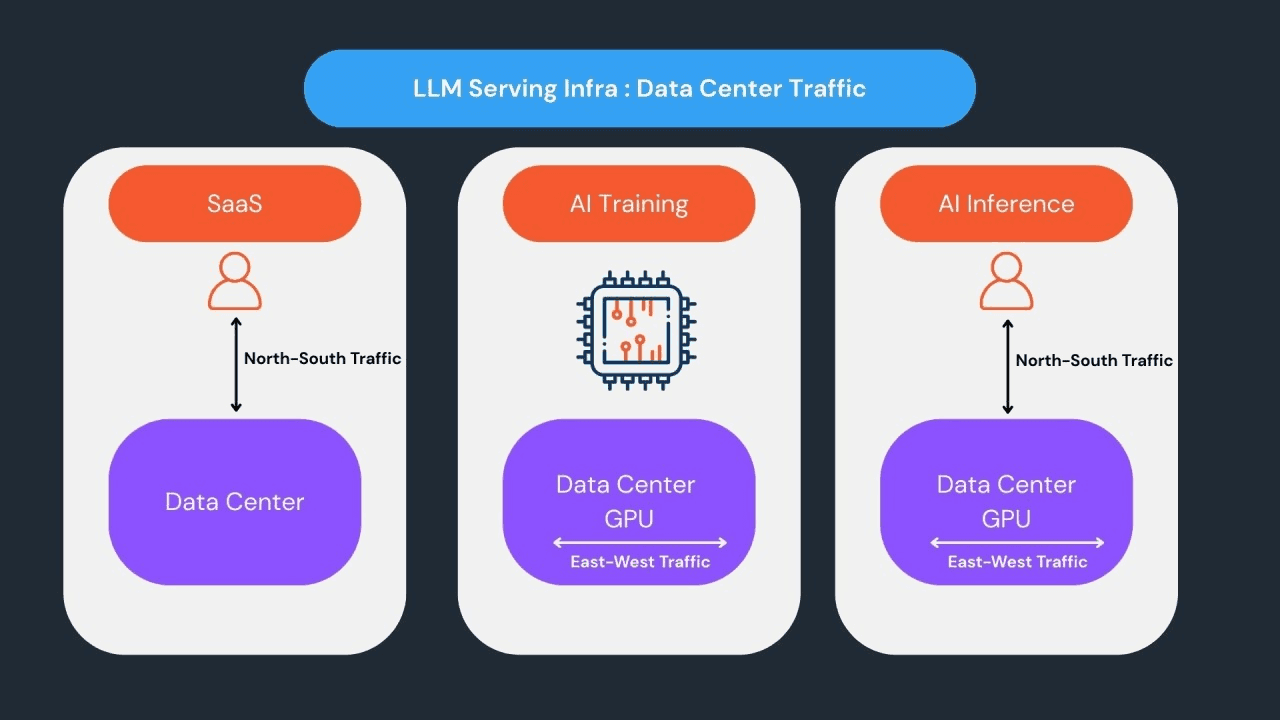
Source: LinkedIn Enterprise-ready LLM infra needs more than model endpoints. It requires:
- CI pipelines that validate prompt behavior, RAG retrieval accuracy, and scoring logic with every update
- Cost observability for API calls, embedding refresh rates, and vector store queries
- Environment-specific configuration versioning to track changes in prompt templates, chain logic, or retriever parameters
Many teams rely on notebooks or static scripts to test these layers. That doesn't scale.
Tight integration between infrastructure and your modelops framework helps eliminate hidden regressions. For example, a 20% drop in grounding caused by a prompt or retriever update should trigger alerts instead of waiting for users to report broken outputs.
By embedding custom optimization tools for LLM directly into CI/CD workflows, you can detect changes early, evaluate outputs automatically, and maintain system integrity across environments.
This alignment is the backbone of AI model lifecycle management. It gives visibility into what changed, when it changed, and how it affected performance, whether you're deploying updates weekly or running multiple LLM chains across business functions.
For enterprise teams, dashboards replace notebooks. Version-controlled, observable, and testable pipelines replace ad hoc tuning. And custom optimization tools for LLM make that shift possible.
RAG as a Service & LLM Knowledge Base Optimization
Many teams adopt rag-as-a-service to simplify infrastructure and speed up development. These managed platforms provide vector storage, retrieval pipelines, and model orchestration automatically. But tuning doesn’t end there.
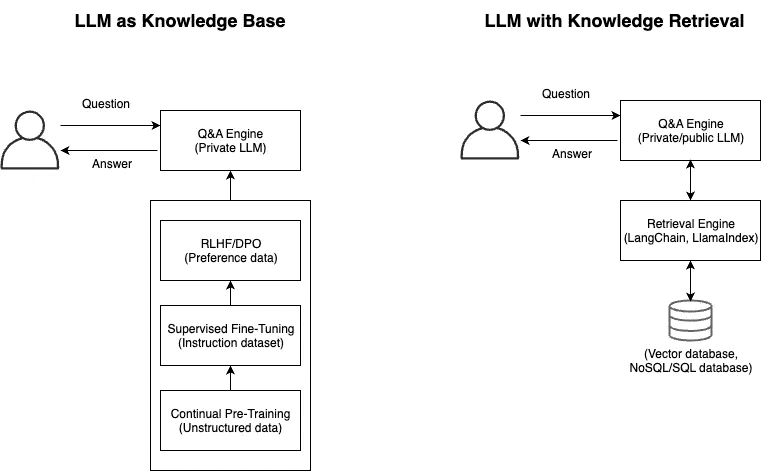
Source: Medium
Most production issues stem from silent failures inside the RAG workflow:
- Outdated embeddings that no longer reflect updated documents
- Irrelevant chunk retrieval due to generic chunking or missing metadata filters
- Weak reranking strategies that surface semantically off-topic context
Even with managed infrastructure, teams still need visibility and control.
That’s where custom optimization tools for LLM come in.
These tools let you:
- Track embedding freshness and flag stale or missing vectors
- Apply business-specific logic to rerank retrieved chunks before model input
- Run real-time scoring evaluations to detect drift in grounding or fluency
- Align RAG outputs with the internal LLM knowledge base without retraining the foundation model
Without these controls, LLMs begin producing outputs that appear fluent but fall short, particularly in environments that are regulated or heavily domain-focused.
Whether you’re using in-house tools or relying on rag as a service providers, custom layers are required to meet enterprise standards. You need tools that understand your context, not just the model’s.
Custom optimization tools for LLM close this gap by making retrieval and reranking auditable, testable, and adaptable without overhauling your entire stack.
Final Thoughts
Optimization isn’t a nice-to-have; it’s what makes large-scale LLM adoption viable. As LLM use cases multiply, so do the risks: degraded fluency, broken retrieval, and uncontrolled token costs.
Custom optimization tools for LLM are the only reliable way to detect and fix these issues. They uncover problems that generic APIs and wrappers miss, like inconsistent grounding, outdated embeddings, or unstable prompts.
Teams aiming for production-grade LLM maturity need more than experiments. They need evaluation pipelines, prompt versioning, real-time scoring, and retriever monitoring.
Whether you're managing internal LLM infra or using rag-as-a-service, these tools help you stay in control without slowing down delivery.
Would you like assistance in building custom optimization tools for the LLM in your technology stack? Let’s talk.
Start your project with Muoro!
Fill out the form and our business team will reach out to you within 24 hours.
Similar Blog Posts
Similar Blog Posts


Start Building Data-First Production AI
Move beyond pilots. Build AI systems that drive real decisions and measurable outcomes.
TALK TO US